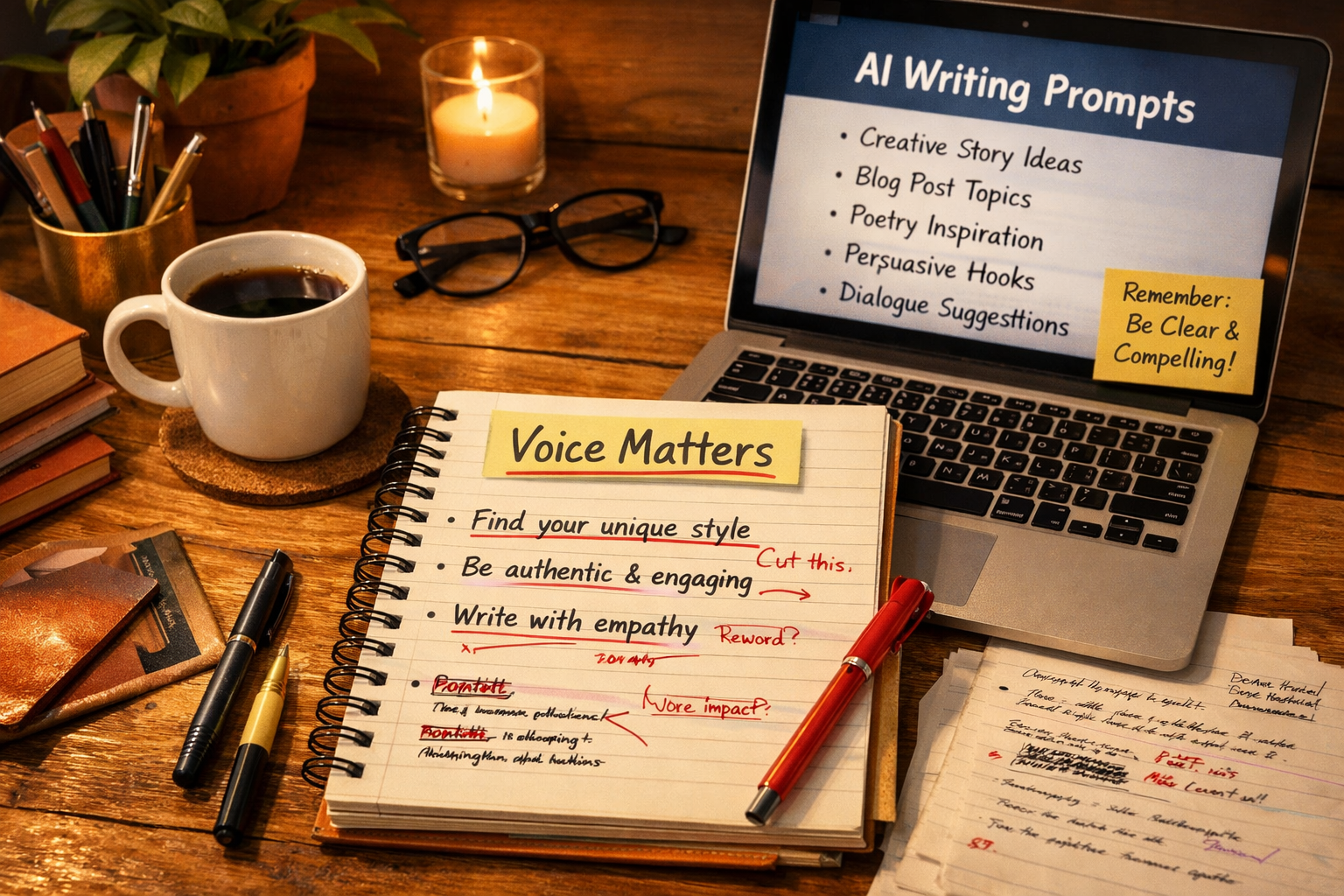
Writing In The AI Age
Human vs AI Writing: What Readers Still Connect With
AI can help you write faster. It can organize ideas, suggest headlines, clean up rough drafts, and even help you build a content plan. But there is still one thing readers can feel almost instantly: whether a real person is behind the words.
Disclosure: This post may include affiliate links. If you choose to join through one of my links, I may earn a commission at no extra cost to you. I only recommend tools or platforms when they make sense for writers trying to build something real.
Quick Answer: Does Human Writing Still Matter In 2026?
Yes. Human writing still matters because readers connect with experience, honesty, judgment, humor, hesitation, confidence, and voice. AI can help with structure and speed, but it cannot replace the personal perspective that makes a reader think, “This person gets it.”
The strongest writers in 2026 will not be the ones who ignore AI. They will be the ones who use AI carefully while still sounding like a real human being with something useful to say.
Let’s be honest. AI writing tools are not going away.
They are built into search, content platforms, website builders, marketing tools, email tools, and training platforms. Wealthy Affiliate now highlights AI-powered tools alongside training, hosting, support, and online business education. For a beginner writer, that can be helpful. It can also be intimidating.
Because once everyone has access to faster writing tools, the question changes.
It is no longer, “Can I create content?”
It becomes, “Can I create content people actually care about?”
That is where human writing still wins.
AI Can Write Words. Humans Create Connection.
AI can produce a clean paragraph. It can give you a decent outline. It can explain a topic in plain English. It can help you get past the blank page when your brain feels stuck.
That is useful.
But connection is different.
Connection happens when a reader senses that you understand the problem because you have wrestled with it too. It happens when your example feels specific instead of generic. It happens when you admit what confused you, what worked, what failed, and what you would do differently next time.
A reader can feel that.
For example, AI might write this:
Writing consistently is important for building an online presence.
That sentence is true. But it does not feel very alive.
A human writer might say this instead:
The hardest part of writing online is not usually the writing. It is coming back the next day when yesterday’s post did not get much attention.
That second version feels different because it carries experience. It sounds like someone has been there.
That is what readers still connect with.
What Readers Can Still Feel In Human Writing
Readers may not always know why one article feels better than another. But they can sense the difference between useful writing and content that was simply assembled.
Here are the human signals that still stand out in 2026.
1. A Real Point Of View
Readers do not just want information. They want help deciding what matters. Your perspective gives the article direction.
2. Specific Examples
Generic advice disappears fast. Specific examples make the reader trust that you understand the topic.
3. Honest Judgment
A human writer can say, “This helps beginners, but it may not fit everyone.” That kind of honesty builds trust.
4. Voice
Voice is the rhythm, attitude, and personality behind the words. It is what makes your article sound like you.
The Problem With “Perfect” AI Writing
One of the biggest dangers with AI writing is that it often sounds too smooth.
Everything is balanced. Everything is polished. Everything is neatly arranged. But sometimes, that polish removes the fingerprints.
Readers do not always want perfect. They want useful. They want clear. They want honest. They want to feel like a real person is guiding them through the topic instead of handing them a polished summary from a machine.
This matters even more for writers who want to build blogs, affiliate websites, newsletters, or long-term content brands. If your writing sounds like everyone else’s AI-assisted article, your reader has no reason to remember you.
Your job is not to sound flawless.
Your job is to sound clear, trustworthy, and worth coming back to.
Where AI Actually Helps Writers
AI is not the enemy of good writing. Used carefully, it can be a helpful assistant.
It can help you:
- Brainstorm article angles.
- Build outlines faster.
- Find gaps in a draft.
- Rewrite confusing sections more clearly.
- Create headline variations.
- Organize a content calendar.
- Turn rough notes into a usable first draft.
That is a good thing, especially for beginners.
Many new writers do not quit because they lack ideas. They quit because the process feels messy. They do not know what to write first, how to structure the article, how to connect SEO with reader value, or how to keep publishing when progress feels slow.
This is one reason platforms like Wealthy Affiliate can make sense for writers who want structure. The value is not that a tool magically writes your future for you. The value is having training, website tools, keyword research, AI assistance, and community support in one place so you are not trying to duct-tape the entire process together alone.
Writer’s Note
AI can help you move faster, but it should not decide what you believe. Use it for support. Use your own judgment for the final message.
The Human Editing Layer Is Where The Magic Happens
The best AI-assisted writing still needs a human editing layer.
That is where you ask better questions:
- Is this actually helpful?
- Does this sound like me?
- Did I add anything from my own experience?
- Would a beginner understand this?
- Am I being honest, or am I overpromising?
- Does this article help the reader take the next step?
That editing layer is where your credibility shows up.
For affiliate writers, this matters even more. Readers are tired of articles that pretend every tool is amazing. They want real guidance. They want to know who a platform is good for, who it may not fit, what the learning curve looks like, and what expectations are realistic.
If you are writing about Wealthy Affiliate, for example, the honest angle is not “join this and money appears.” That is not how real online business works.
The honest angle is this:
Wealthy Affiliate can help a beginner writer understand websites, content, keywords, affiliate marketing, and online business structure. But the writer still has to do the work. You still have to publish, revise, learn, and stay consistent.
That kind of honesty is human. And it is exactly what readers need.
Human vs AI Writing: A Simple Comparison
| Writing Element | AI Can Help With | The Human Advantage |
|---|---|---|
| Structure | Outlines, sections, summaries | Choosing what matters most to the reader |
| Voice | Tone suggestions | Personality, rhythm, humor, lived perspective |
| Research | Idea organization and topic expansion | Judgment, verification, and context |
| Trust | Clear explanations | Honesty, disclosure, and personal accountability |
| Connection | Readable drafts | Making the reader feel understood |
What This Means For New Writers
If you are wondering whether AI has ruined your chances of becoming a writer, take a breath.
It has not.
In some ways, AI has made the writing opportunity clearer. Anyone can generate content now. That means the advantage moves toward writers who can add meaning, trust, and personal judgment.
You do not need to compete with AI by becoming faster than a machine. You compete by becoming more useful than generic content.
That starts with simple habits:
- Write to one reader, not “the internet.”
- Use examples from real questions, not vague topics.
- Say what you actually think.
- Be honest about limitations.
- Revise for clarity before trying to sound clever.
- Use AI as a support tool, not a substitute for your voice.
If you are just getting started, read How to Start Writing Today. It gives you a simple beginner method that makes writing feel possible instead of overwhelming.
Why This Matters For Affiliate Marketing Writers
Affiliate marketing is changing too.
Old-style affiliate content often chased keywords first and readers second. That approach is getting weaker. Readers want recommendations that feel earned. They want comparison articles that explain trade-offs. They want reviews that do not sound like sales pages. They want writers who can say, “This is useful, but only if it fits your situation.”
That is where human writing becomes a business advantage.
If you are building a writer website, niche blog, or affiliate content site, your voice is not decoration. It is part of your trust signal.
This is why Wealthy Affiliate can be useful when approached the right way. It gives beginners a framework for building a website-based business, but the content still needs your perspective. The tools can support the process. They cannot replace the relationship you build with readers.
For a deeper look at whether the platform fits writers, read Wealthy Affiliate for Writers Review 2026.
A Practical Next Step
If you want to turn your writing into a blog, niche site, or affiliate marketing path, Wealthy Affiliate can give you structure, training, website tools, keyword research, and AI-assisted workflows in one place.
It is not magic. It is not instant income. But for writers who want a guided way to build online, it can be a practical place to begin.
The Best Writing In 2026 Will Feel More Human, Not Less
Here is the strange thing about AI.
The more common it becomes, the more valuable human voice becomes.
When readers are surrounded by polished summaries, they notice writing that sounds personal. They notice a sentence with a little edge. They notice a practical example. They notice when someone admits the messy part. They notice when the writer respects them enough to be clear.
That is good news for new writers.
You do not have to be perfect to begin. You do not have to write like everyone else. You do not have to pretend AI does not exist.
You just have to keep your fingerprints on the work.
Use the tools. Learn the systems. Study SEO. Build the website. Explore affiliate marketing if it fits your goals. But do not give away the one thing that makes your writing worth reading.
Your voice still matters.
Your judgment still matters.
Your honesty still matters.
And when you make readers feel understood, they remember you.
Make them laugh, make them think, but above all, make them feel.
Questions New Writers Ask About AI Writing
Is AI writing bad for SEO?
No. AI-assisted writing is not automatically bad for SEO. The bigger issue is whether the final content is helpful, original, accurate, and written for people instead of created only to chase rankings.
Should new writers use AI?
Yes, but carefully. AI can help with outlines, brainstorming, editing, and organization. New writers should still make the final decisions, add personal examples, and revise the article until it sounds human.
Can readers tell when writing is AI-generated?
Sometimes. Readers may not always identify AI directly, but they can often feel when an article is generic, repetitive, too polished, or missing real perspective.
What makes human writing stand out?
Human writing stands out through voice, honesty, examples, judgment, and emotional connection. Readers connect when they feel a real person understands their question.
Can Wealthy Affiliate help writers use AI better?
Wealthy Affiliate can help writers by giving them structure, training, website tools, keyword research, and AI-assisted workflows. It is still up to the writer to add judgment, consistency, and personal voice.
Keep Learning